Interview with TTBL Executive Director Nico Stehle: “Leveraging the Attention to Sustain the League’s Development”
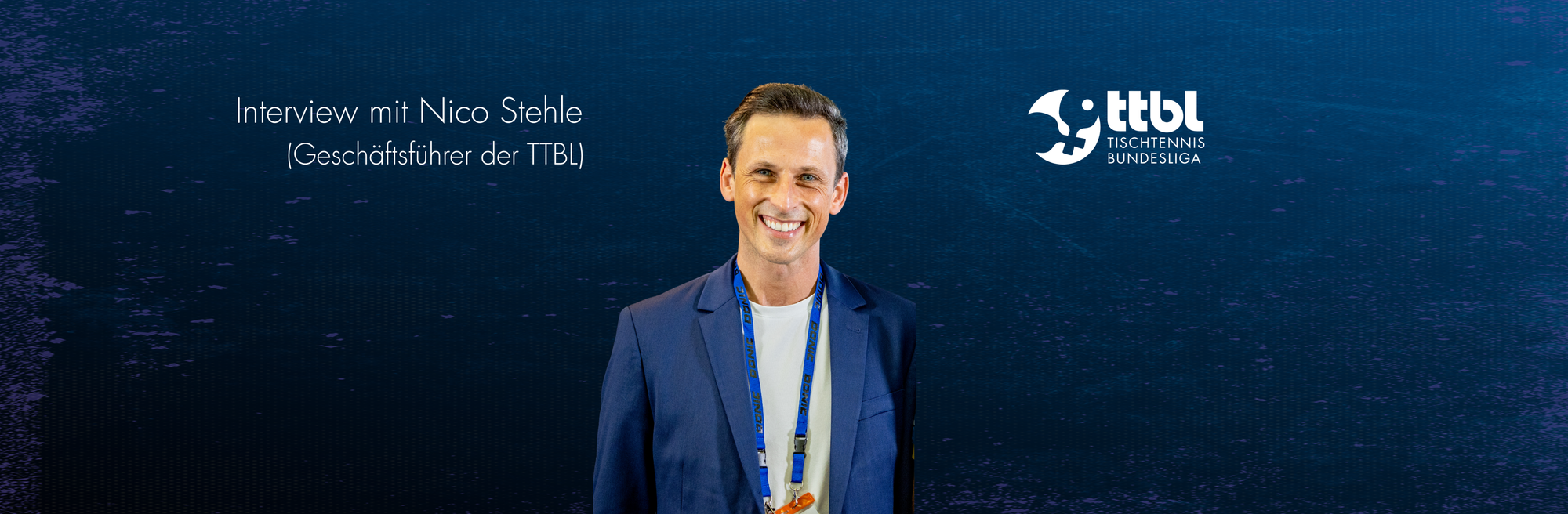
Managing Director Nico Stehle looks back on a successful 2025–26 season in the Table Tennis Bundesliga (TTBL). In this interview, the former Bundesliga pro describes the key insights gained from the excitement surrounding superstar Fan Zhendong’s move to Germany and the associated goals, discusses the new event formats—the Liebherr TTBL Final4 and the Cup Grand Opening—and explains the significance of the TTBL initiative for the German-Chinese Economic Forum.
Nico Stehle, the TTBL has been on its summer break for a little over a month now. Now that some time has passed, what is your overall assessment of the past season?
The 2025–26 season was an extraordinary one for the TTBL in many respects. On the sporting front, we witnessed top-class table tennis—from a thrilling title race and a dramatic relegation battle to the successful debut of new event formats. It’s particularly gratifying that this development is also reflected in the numbers: In the Bundesliga alone, nearly 80,000 spectators watched the matches in the arenas—more than ever before. At the same time, we were able to further increase our reach through media and digital channels and significantly boost our international visibility. Overall, it was a season that demonstrated the potential of our league.
The past season was, on the surface, dominated by the surprising signing of superstar Fan Zhendong by 1. FC Saarbrücken-TT. What broader insights can you draw from the hype surrounding the Olympic champion so far?
The hype surrounding Fan Zhendong is impressive. At the same time, the significance of his signing extends far beyond the sporting realm. It was particularly interesting for us to see the international attention this generated for the entire TTBL. Many people initially became aware of the league because of Fan, but then came to appreciate the high level of play, the professionalism of our clubs, and the overall appeal of the competition. An important insight, therefore, is that top international players not only inspire spectators and fans but can also open up new markets, enable additional media reach, and create new marketing potential. The TTBL’s increased international visibility opens up opportunities that extend far beyond a single season. Our goal now is to leverage this attention sustainably for the further development of the entire league.
How important was Fan’s move to Germany for the Bundesliga, especially in the first year following the departure of German idol Timo Boll?
Timo Boll has shaped the TTBL for many years and has been an outstanding ambassador far beyond the confines of our sport. His departure naturally leaves a void. At the same time, Fan Zhendong’s dedication has helped generate new interest and appeal to international audiences. Both figures represent different chapters in our league’s history. While Timo Boll defined an era, Fan Zhendong is opening up new horizons. This moment was therefore certainly very valuable for the development of the TTBL.
Further down in the lower reaches of the standings, one of the most exciting relegation battles in TTBL history was taking place—and was suddenly over when second-division champion TSV Windsbach declined promotion. What does it take for clubs from the lower division to be able to move up to the TTBL without any ifs or buts?
First and foremost, it requires ambitious clubs with a sustainable structure. The requirements for a Bundesliga club have risen in recent years—in terms of sports, organization, and economics. At the same time, we as a league must continue to improve the framework conditions so that promotion is perceived as a genuine opportunity for development. The growing attention, new marketing opportunities, and the league’s positive economic development can help in this regard. Our goal remains to enable as many clubs as possible to make their way into the TTBL.
One of the season’s key topics was the replacement of the playoff round with the new Liebherr TTBL Final4 format. How would you assess the debut?
Very positively. Our goal with the Liebherr TTBL Final4 was to create an event that would showcase the season’s sporting highlight even more effectively. The inaugural event showed that this concept works. With around 5,600 spectators over the two days of the event, we welcomed more fans than at previous finals. Even more important, however, was the atmosphere in the arena and the positive feedback from fans, clubs, and partners. This reinforces our commitment to consistently continuing down this path.
Will the format remain the same?
Yes. We deliberately introduced the format with a long-term perspective in mind. Changes take time to reach their full potential. That’s why we want to establish the TTBL Final4 as a permanent highlight on the seasonal calendar. At the same time, we’ll use the lessons learned from the premiere to refine individual details and make the event even more attractive year after year.
The past season is almost as far behind us as the upcoming season is still ahead. With Fans’ transfer from Saarbrücken to Borussia Düsseldorf, the deck has been reshuffled. Many observers predict that the move of arguably the world’s best player to Germany’s most successful club will lead to a renewed surge in interest in the TTBL. How do you assess this?
Interest will certainly remain high. Fan Zhendong is one of the biggest names in our sport, and Borussia Düsseldorf is the most successful club brand in German table tennis. This combination holds enormous potential. At the same time, we shouldn’t forget the role that 1. FC Saarbrücken-TT has played in this development. The club took the bold step of bringing Fan Zhendong to Germany, thereby providing important momentum for the entire league. Furthermore, Saarbrücken has established itself in recent years as one of the leading brands in international club table tennis. Four consecutive Champions League titles, as well as last season’s treble of the TTBL, the Cup, and the Champions League, speak for themselves. The fact that Saarbrücken has now signed another world-class player in Hugo Calderano demonstrates the club’s ambition to remain among the European elite. He, too, possesses enormous international appeal and opens up additional opportunities to reach new target groups and markets for our sport. It is precisely this constellation that makes the new season so exciting: Borussia Düsseldorf and 1. FC Saarbrücken-TT—two internationally renowned top clubs—will face off, joined by other ambitious clubs that can enter the title race at any time. That is why I am convinced that the league as a whole will benefit from this development.
As encouraging as Fan’s interest in Saarbrücken so far—and in Düsseldorf going forward—may be, can all the other TTBL clubs also benefit from the current upswing?
I’m convinced they can. International attention for the league ultimately benefits all clubs. Greater reach, new media contacts, additional marketing opportunities, and growing interest from partners create opportunities for all locations. Our task as a league is to actively support this development and distribute the resulting potential as widely as possible. Fan Zhendong’s success is not an end in itself for us. What matters is that the entire league benefits from it.
Revenues from international marketing already rose unexpectedly sharply last season and are likely to grow significantly again as a result of Fan’s transfer. Are there already plans for how to use these additional revenues?
Our goal is to invest additional revenues sustainably in the league’s further development. This includes, in particular, international marketing, digital visibility, the further development of our events, and measures to strengthen the clubs. We want to take advantage of the current opportunities to build long-term structures and elevate the TTBL as a whole to the next level.
Through your initiative to organize a German-Chinese Economic Forum on the sidelines of the new Cup’s grand opening in Nuremberg at the end of August, the TTBL is capitalizing on the momentum generated by the enormous attention Fan Zhendong’s appearances in Germany have garnered in many countries to highlight its international focus. Aside from building a network, what do you hope this event will achieve for the TTBL?
The Economic Forum is a key component of our internationalization strategy. The enormous attention surrounding Fan Zhendong has demonstrated the TTBL’s potential far beyond Germany. We have established our presence on Chinese social media platforms and achieved a very large reach there within a short period of time. At the same time, the TTBL is now broadcast not only in German-speaking countries but also in other international markets. The Business Forum is intended to help strategically advance this development and turn the increased attention into long-term partnerships, new investments, and additional opportunities for the league and its clubs.
Of course, table tennis will also be played in Nuremberg. What are your expectations for the new format, with all the round-of-16 and quarterfinal matches taking place over two days at a single venue?
We want to revitalize the cup and offer fans a truly memorable event. By holding all the round-of-16 and quarterfinal matches at a single venue, we’ll create many exciting matches in a very short period of time. Spectators will experience a high concentration of top-level table tennis, clubs will gain additional visibility, and partners will benefit from a larger platform. We expect this to deliver significant added value for everyone involved and aim to make the cup competition even more appealing overall.
In the run-up to the Cup Grand Opening, critical comments from several lower-division clubs regarding the new format caused quite a stir. How do you plan to keep the second- and third-division clubs on board after the premiere?
The Cup thrives on its openness and the participation of all performance levels. That’s why we naturally take the suggestions that have been made seriously. At the same time, change is always accompanied by uncertainty. After the premiere, we will evaluate the format together with the clubs and openly discuss possible adjustments. Our goal remains to find a solution that is attractive from a sporting perspective, economically sound, and appealing to as many clubs as possible. It will be crucial that we continue to closely involve the clubs in the competition’s further development.
What are your general expectations and hopes for the new season?
Last season showed just how much potential the TTBL has. For the upcoming season, I hope we can continue to build on that momentum. From a competitive standpoint, I expect this to be one of the most exciting seasons in recent years. In addition, we want to attract new fans to our sport, further increase the league’s international visibility, and bring on additional partners for the TTBL. If we succeed in turning the current attention into sustainable growth, the new season could become another important milestone in the TTBL’s development.
Thank you very much for the interview, Nico Stehle.
Florian Manzke